
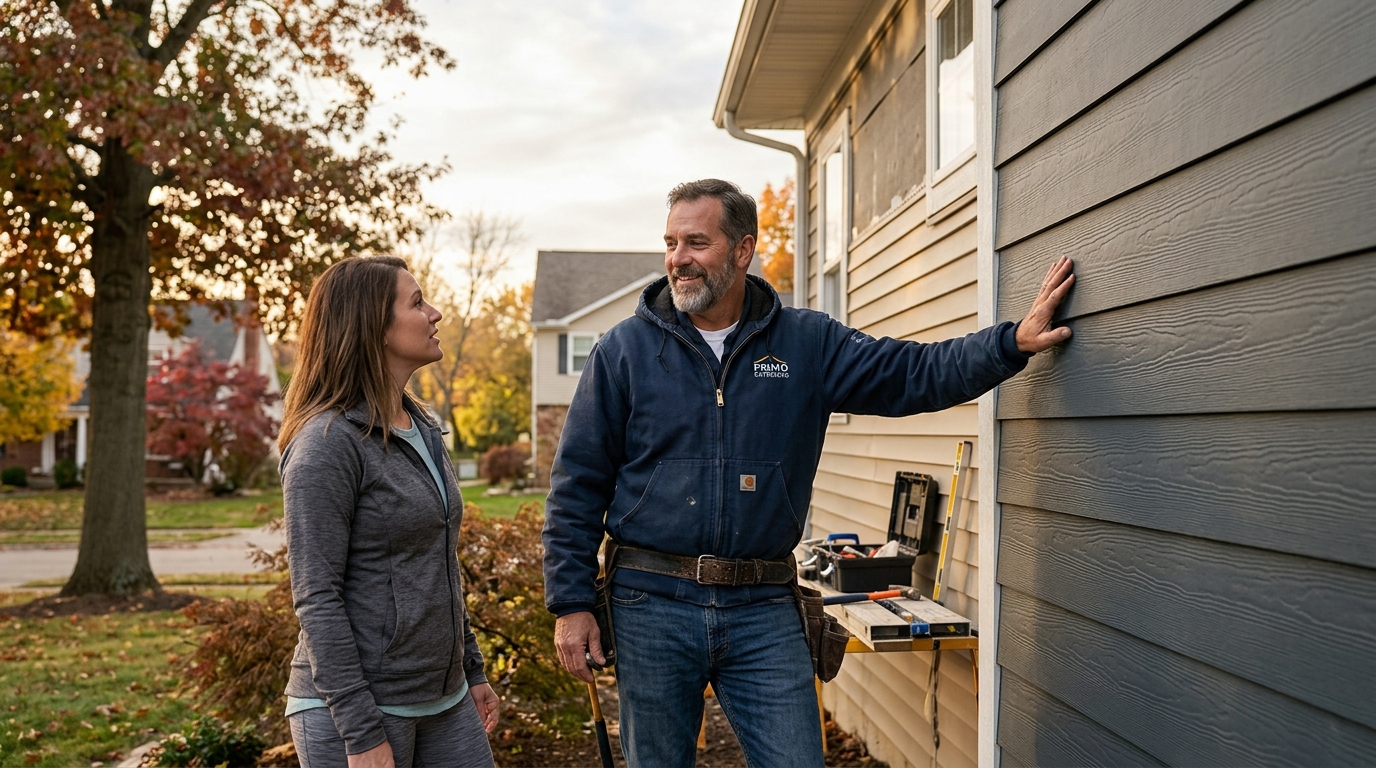
Step-by-Step Installation Guide for Vinyl and Fiber Cement Siding in Cincinnati and Dayton Homes
Homeowners in the Cincinnati and Dayton regions face unique weather challenges that directly impact exterior durability. According to recent climate data, the Ohio River Valley experiences significant freeze-thaw cycles that can compromise poorly installed siding. Primo Exteriors has spent over 35 years mastering the art of exterior protection, ensuring that every home in Liberty Township and surrounding areas withstands these seasonal extremes. This guide details the precise installation workflows for vinyl and fiber cement siding, helping you understand the craftsmanship required to protect your largest investment. (Contact Us Primo Exteriors)
Why Siding Matters in Ohio's Climate
Siding serves as the primary barrier against moisture intrusion, wind-driven rain, and temperature fluctuations. In Cincinnati and Dayton, humidity levels can spike during summer months, leading to mold growth if ventilation is inadequate. Proper installation is not just about aesthetics; it is about structural integrity. (Gutter Systems Services Primo)
When siding fails, water penetrates the sheathing and insulation, leading to rot and energy loss. Primo Exteriors prioritizes moisture management in every project. We utilize weather-resistant barriers and proper flashing techniques to ensure that water is directed away from your home's foundation. This approach aligns with best practices outlined by the U.S. Department of Energy for improving home envelope efficiency.
Furthermore, the aesthetic value of siding contributes significantly to curb appeal. A well-maintained exterior can increase property value by up to 7% according to Realtor.com market analyses. Choosing the right material and installer is critical to achieving both durability and visual appeal.
Vinyl Siding Installation Process
Vinyl siding remains a popular choice for homeowners due to its cost-effectiveness and low maintenance requirements. However, vinyl is sensitive to temperature changes during installation. If installed incorrectly, it can expand and contract excessively, leading to buckling or seam separation.
Step 1: Surface Preparation and Inspection
The installation begins with a thorough inspection of the existing substrate. Any rotten wood or damaged sheathing must be replaced before new siding is applied. Primo Exteriors ensures that the surface is clean, flat, and dry. This step is crucial for preventing visible imperfections in the final finish.
Step 2: Installing Weather-Resistant Barrier
A high-quality weather-resistant barrier (WRB) is applied over the sheathing. This layer acts as a secondary water barrier. In Ohio's rainy seasons, this barrier prevents water from reaching the structural framing. We often use Owens Corning branded materials to ensure compatibility and warranty validity.
Step 3: Furring Strips and Leveling
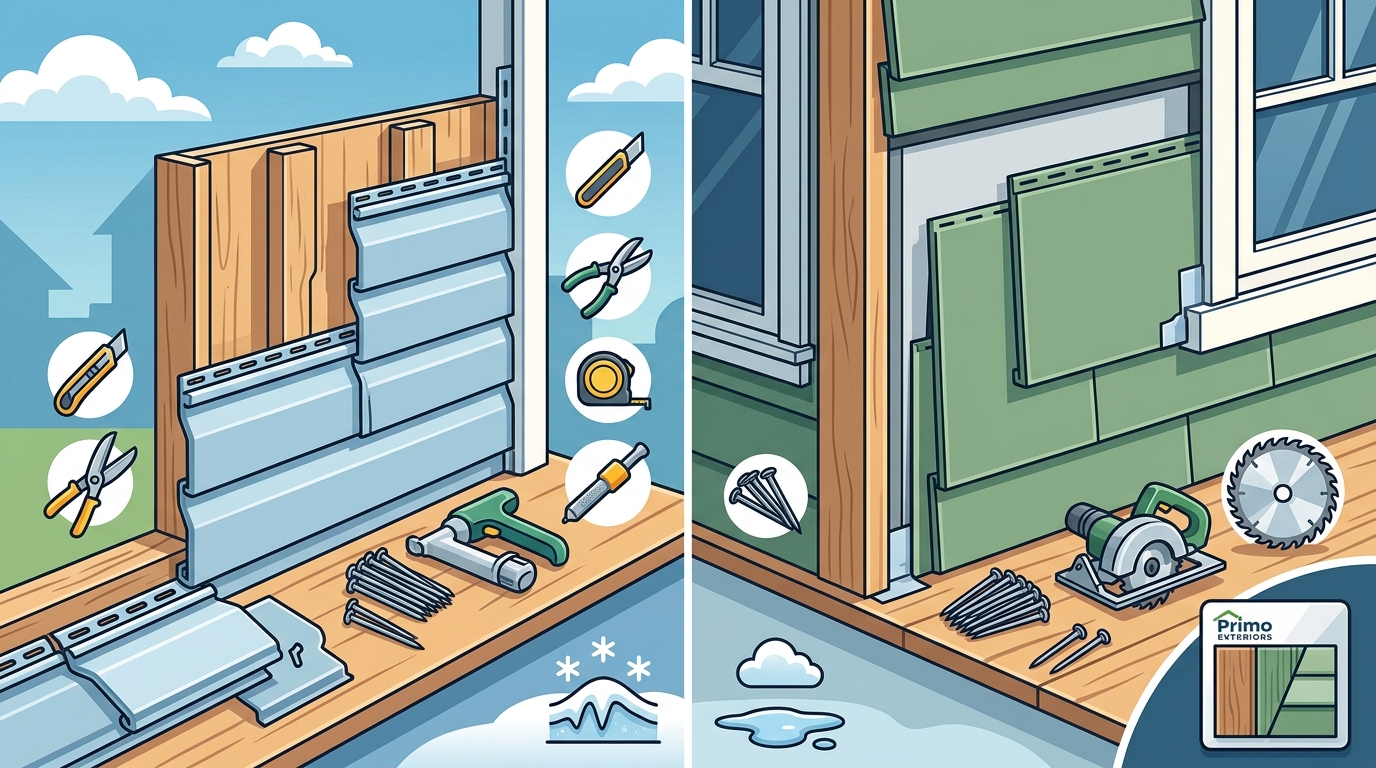
Furring strips are installed vertically to create a flat plane for the siding. This step also allows for airflow behind the siding, which helps dry out any incidental moisture. Proper leveling ensures that the siding panels hang straight and lock together securely.
Step 4: Panel Installation and Locking
Vinyl panels are installed from the bottom up. Each panel is snapped into the J-channel or previous panel. Crucially, vinyl must be installed with a slight gap to allow for thermal expansion. If nailed too tightly, the panels will buckle during hot Ohio summers. Our certified technicians follow manufacturer guidelines to ensure proper spacing.
Step 5: Trim and Detailing
The final step involves installing trim pieces around windows, doors, and corners. These pieces provide a finished look and seal gaps against pests and weather. Precision cutting ensures a tight fit that enhances the home's architectural details.
Fiber Cement Siding Installation Process
Fiber cement siding, such as HardiePlank, offers superior durability and fire resistance. It is heavier than vinyl and requires different installation techniques. This material is ideal for homeowners seeking a wood-like appearance without the maintenance headaches.
Step 1: Substrate and Moisture Management
Similar to vinyl, the substrate must be prepared. However, fiber cement requires a specific type of WRB that is compatible with its porous nature. We ensure that the barrier is taped and sealed at all seams to prevent moisture migration.
Step 2: Layout and Measurement
Fiber cement panels are cut to size using specialized tools. Because the material is dense, it requires diamond-tipped blades to prevent chipping. Precise measurement is vital because these panels do not have the same flexibility as vinyl.
Step 3: Fastening and Spacing
Fasteners must be driven in at the correct depth. Over-driving screws can damage the panel, while under-driving them leaves heads exposed. Proper fastening ensures the siding withstands high winds common in the Dayton region. We follow the James Hardie installation standards to maintain warranty coverage.
Step 4: Caulking and Sealing
Fiber cement requires careful caulking at joints and intersections. Unlike vinyl, which relies on overlapping panels for water shedding, fiber cement often uses a sealed joint system. This method provides a more robust defense against driving rain.
Step 5: Painting and Finishing
While pre-finished options exist, many fiber cement installations are painted on-site. High-quality acrylic latex paints are recommended to allow the material to breathe. Primo Exteriors uses premium paints that resist fading and chalking, ensuring long-term color retention.
Material Comparison and Selection
Choosing between vinyl and fiber cement depends on your budget, aesthetic preferences, and long-term goals. The table below summarizes the key differences.
| Feature | Vinyl Siding | Fiber Cement Siding |
|---|---|---|
| Cost | Lower upfront cost | Higher upfront cost |
| Maintenance | Low (wash occasionally) | Medium (repaint every 10-15 years) |
| Durability | Resistant to rot, but can crack | Highly durable, fire-resistant |
| Installation Complexity | Standard | Requires specialized tools |
| Lifespan | 20-40 years | 50+ years |
For homeowners in Cincinnati and Dayton, both options are viable. However, fiber cement offers greater longevity and resistance to impact. Vinyl provides a cost-effective solution for those looking to update their home's appearance quickly. Primo Exteriors can help you decide based on your specific needs. Visit our Exterior Siding Services page for more details.
Key Takeaways
- Climate Impact: Ohio's freeze-thaw cycles demand siding with proper expansion gaps and moisture barriers.
- Vinyl Flexibility: Vinyl siding must be installed with slack to prevent buckling during temperature swings.
- Fiber Cement Durability: Fiber cement offers superior fire resistance and longevity but requires precise fastening.
- Professional Installation: Improper installation voids warranties and leads to premature failure. Always hire certified contractors.
- Moisture Management: Weather-resistant barriers and flashing are critical for preventing rot in both systems.
- Brand Certifications: Primo Exteriors is an Owens Corning Preferred Contractor, ensuring high-quality standards.
- Local Expertise: Over 35 years of experience in the Cincinnati and Dayton markets ensures reliable service.
Frequently Asked Questions
How long does siding installation take?
Most residential siding projects in the Cincinnati area are completed within 5 to 7 days, depending on the size of the home and the material chosen. Fiber cement may take slightly longer due to cutting and fastening requirements.
Is vinyl siding better than fiber cement for Ohio weather?
Both materials perform well in Ohio. Vinyl is more cost-effective and resistant to moisture damage, while fiber cement offers greater durability and fire resistance. The best choice depends on your budget and aesthetic preferences.
Do I need to remove old siding before installing new?
Primo Exteriors can often install new siding over one layer of existing siding. However, if the underlying structure is damaged or there are multiple layers, removal is necessary to ensure a flat, secure surface.
What warranty do you offer on siding?
We offer manufacturer warranties on materials, which typically range from 20 years to a lifetime for premium products. Additionally, we provide a workmanship warranty to cover installation defects.
How does siding affect home energy efficiency?
New siding with proper insulation can significantly reduce heating and cooling costs. According to the Environmental Protection Agency, improving your home envelope can save homeowners an average of 15% on energy bills.
Can Primo Exteriors help with insurance claims for storm damage?
Yes, we assist homeowners with the insurance claim process for storm-related siding damage. Our team works directly with your adjuster to ensure fair coverage and timely repairs.
What is the difference between J-channels and corner posts?
J-channels are used to frame edges around windows and doors, while corner posts provide a finished look at the corners of the house. Both are essential for a professional installation.
Get Your Free Quote Today
Ready to upgrade your home's exterior? Primo Exteriors is here to help. As a family-owned business with over 35 years of experience, we provide personalized solutions for your roofing, siding, and gutter needs. Contact us today for a free, no-obligation quote and inspection. Call us at (513) 341-8551 or visit our Request Estimate page to get started.