

Water damage is the silent destroyer of residential properties, often starting with a simple clog. According to the Insurance Institute for Business & Home Safety, proper drainage systems can reduce water damage risks by up to 40 percent in severe weather events. Neglected gutters overflow, saturating the soil around your foundation and inviting mold into your attic. This guide provides the exact methodology to clear your drainage system safely and effectively.
Safety Preparation and Tool Selection
Before you touch a single leaf, you must establish a safe working environment. Gutter cleaning involves working at height, which introduces significant fall risks. Safety is the non-negotiable foundation of this task. Always use a sturdy, extension-rated ladder placed on firm, level ground. If your home has multiple stories, consider using a ladder stabilizer to prevent damage to the gutters and improve stability.
You will need specific tools to perform this job efficiently. A standard bucket with a hook for the ladder rung allows you to deposit debris without constantly climbing down. Wear heavy-duty gloves to protect your hands from sharp metal edges, broken glass, and biological hazards like mold or rodent droppings. Safety glasses are essential to prevent debris from falling into your eyes during the scooping process.
For those with steep roofs or complex architectural features, the risk may outweigh the benefit of DIY. In such cases, professional intervention is the only logical choice. You can explore comprehensive exterior services that handle high-risk maintenance with industrial-grade equipment.
The Debris Removal Process
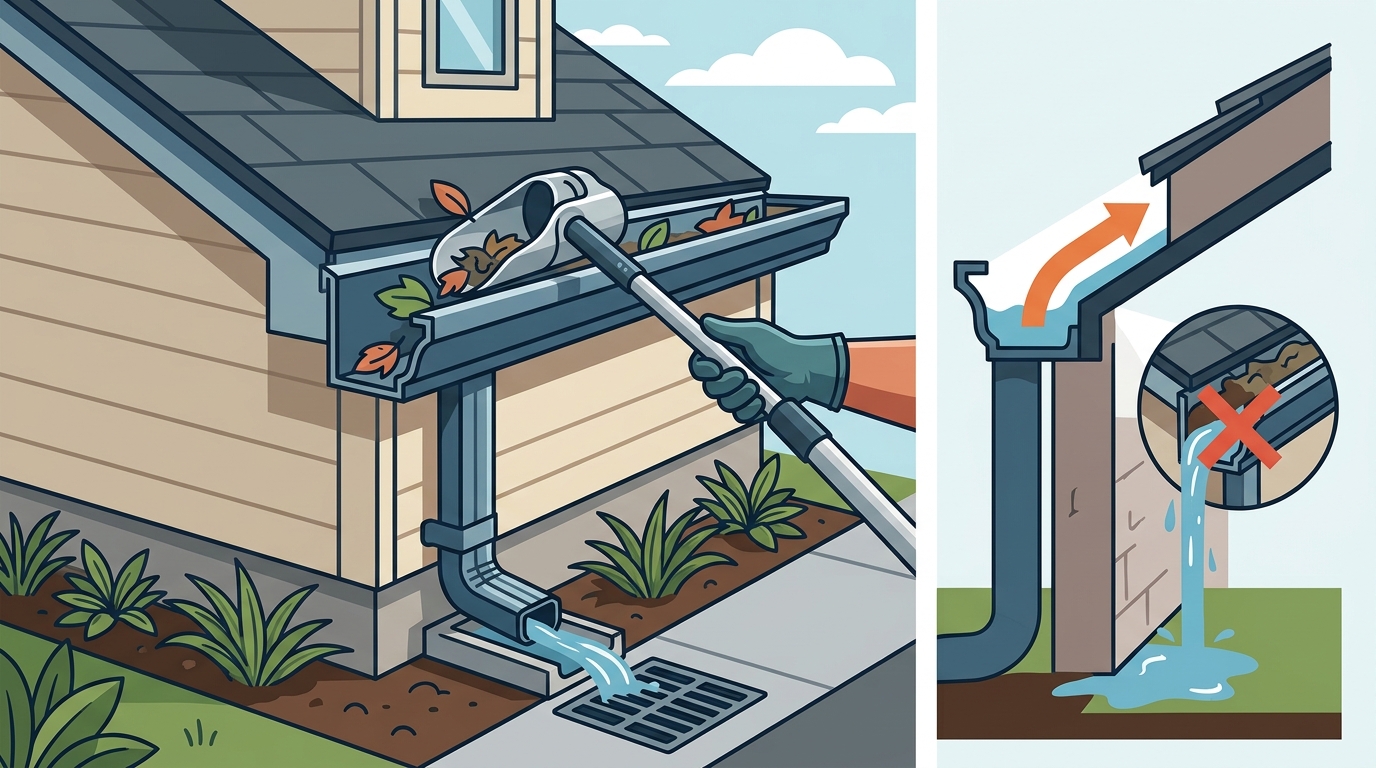
Position your ladder securely and begin working from the downspout outward. This technique ensures that you do not push debris directly into an already clear exit point. Use your gloved hands or a small plastic scoop to remove large clumps of leaves, twigs, and sediment. Place this material directly into your bucket.
Pay close attention to the corners and elbows of the gutter system. These areas act as natural traps for wind-blown debris and are often the primary cause of blockages. If the gutters are heavily saturated with mud or moss, use a stiff-bristled brush to loosen the material before scooping. This step is critical for maintaining optimal gutter performance and preventing long-term corrosion.
Do not neglect the area immediately surrounding the downspout opening. This is the most common choke point in any drainage system. Remove all visible obstructions by hand to ensure a clear path for water flow. If the blockage is deep inside the pipe, you will address it in the next phase.
Flushing and Downspout Clearing
Once the bulk of the debris is removed, you must test the hydraulic integrity of the system. Connect a standard garden hose to a water source and insert the nozzle into the top of the downspout. Turn the water on to full pressure. If the water backs up and overflows the gutter, the downspout is blocked.
To clear a blocked downspout, you can use a plumber's snake or a specialized downspout cleaning attachment for your hose. Feed the tool down the pipe until you feel resistance, then apply pressure to break up the compacted debris. Alternatively, start at the bottom of the downspout and work upward with the hose to push the blockage out from the base.
After clearing the downspout, move the hose along the length of the gutter. Watch how the water flows. It should move quickly toward the downspout without pooling. EPA guidelines emphasize that proper stormwater management is vital for preventing local flooding and erosion. If water pools in specific sections, the gutter may have lost its proper pitch or slope.
Post-Cleaning Inspection Checklist
Cleaning is only half the battle. You must inspect the physical condition of the gutter system to identify wear and tear. Look for the following critical indicators during your inspection:
- Sagging Sections: Gutters that pull away from the fascia board indicate failed hangers or rotting wood. This requires immediate repair to prevent detachment.
- Rust and Corrosion: Small rust spots can be sanded and painted, but large holes or perforations require section replacement.
- Seam Leaks: Check the joints between gutter sections. Leaking seams often indicate failed sealant that needs reapplication.
- Fascia Board Condition: Inspect the wood behind the gutters. Soft, rotting wood suggests chronic water overflow that has damaged the structural support.
If you discover significant structural issues, do not attempt a temporary fix. Structural integrity is paramount for protecting your home's exterior envelope. Professional contractors can assess whether a full replacement is more cost-effective than repeated repairs.
Long-Term Prevention Strategies
Regular cleaning is necessary, but prevention reduces the frequency of maintenance. Installing gutter guards is the most effective method to keep debris out of your drainage system. These barriers allow water to enter while blocking leaves and large twigs.
There are several types of gutter protection systems available. Mesh screens are affordable and easy to install but may require occasional cleaning themselves. Foam inserts block debris but can become saturated with water during heavy rains. Continuous hanger systems, such as those used in premium installations, provide superior strength and durability.
For homeowners in areas with heavy pine needle fall or dense tree cover, standard guards may not be sufficient. Advanced microfiltration systems offer a higher level of protection against fine debris. These systems often come with extensive warranties, providing peace of mind for years to come. You can learn more about advanced gutter guard technologies that utilize continuous hanger systems for maximum longevity.
| Prevention Method | Best For | Maintenance Level | Cost Estimate |
|---|---|---|---|
| Mesh Screens | General leaf protection | Low | $2 - $5 per linear foot |
| Reverse Curve Guards | Heavy rain regions | Very Low | $8 - $12 per linear foot |
| Microfiltration Systems | Pine needles and fine debris | Negligible | $10 - $15 per linear foot |
| Professional Cleaning | Annual maintenance | None (Outsourced) | $150 - $300 per visit |
Key Takeaways
- Regular gutter cleaning prevents foundation erosion and basement flooding, which are leading causes of home insurance claims.
- Always prioritize ladder safety by using stabilizers and having a spotter when possible.
- Flushing downspouts with a hose is the only reliable way to verify internal clearance.
- Inspecting the fascia board during cleaning reveals hidden structural damage before it becomes catastrophic.
- Gutter guards significantly reduce maintenance frequency but do not eliminate the need for occasional inspection.
- Primo Exteriors has over 35 years of experience in delivering exterior solutions to the Cincinnati and Dayton areas.
- Professional installation of seamless gutters offers superior durability compared to sectional DIY kits.
Frequently Asked Questions
How often should I clean my gutters?
You should clean your gutters at least twice a year, typically in late spring and late fall. Homes surrounded by many trees may require quarterly cleaning to prevent rapid buildup.
Can I clean my gutters from the ground?
Yes, there are specialized gutter cleaning wands that attach to a garden hose. These tools use water pressure to flush debris out from the ground. However, they may not remove compacted mud or large debris as effectively as manual cleaning.
What is the best type of gutter guard?
The best gutter guard depends on your local environment. Microfiltration systems are ideal for areas with pine needles, while mesh screens work well for general leaf protection. Continuous hanger systems provide the best overall durability.
How do I know if my gutters are clogged?
Signs of clogged gutters include water overflowing the sides, plants growing in the gutters, sagging sections, and water stains on your siding. During rain, listen for gurgling sounds coming from the downspouts.
Is it safe to use a pressure washer for gutters?
Using a pressure washer on gutters is generally not recommended. The high pressure can damage the gutter finish, dislodge seams, and force water under the roof shingles. Low-pressure flushing is safer and more effective.
What causes gutters to pull away from the house?
Gutters pull away due to the weight of debris and water, ice dam formation in winter, or rusted and failed hangers. This indicates a structural failure that requires immediate repair to prevent detachment.
Do gutter guards eliminate the need for cleaning?
No, gutter guards reduce the frequency of cleaning but do not eliminate it. Fine debris like pine needles and roof grit can still accumulate on top of the guards and require occasional removal.
Get Professional Assistance
Maintaining your home's drainage system is critical for protecting your largest investment. If you are unsure about the structural integrity of your current system or prefer not to climb ladders, professional help is available. Primo Exteriors offers expert gutter installation and repair services tailored to Ohio's climate.
Our team provides free, no-obligation inspections to assess your needs. We are committed to delivering quality workmanship and customer satisfaction. Contact us today to schedule your consultation and secure your home against water damage.
Request a Quote to get started with your project.