
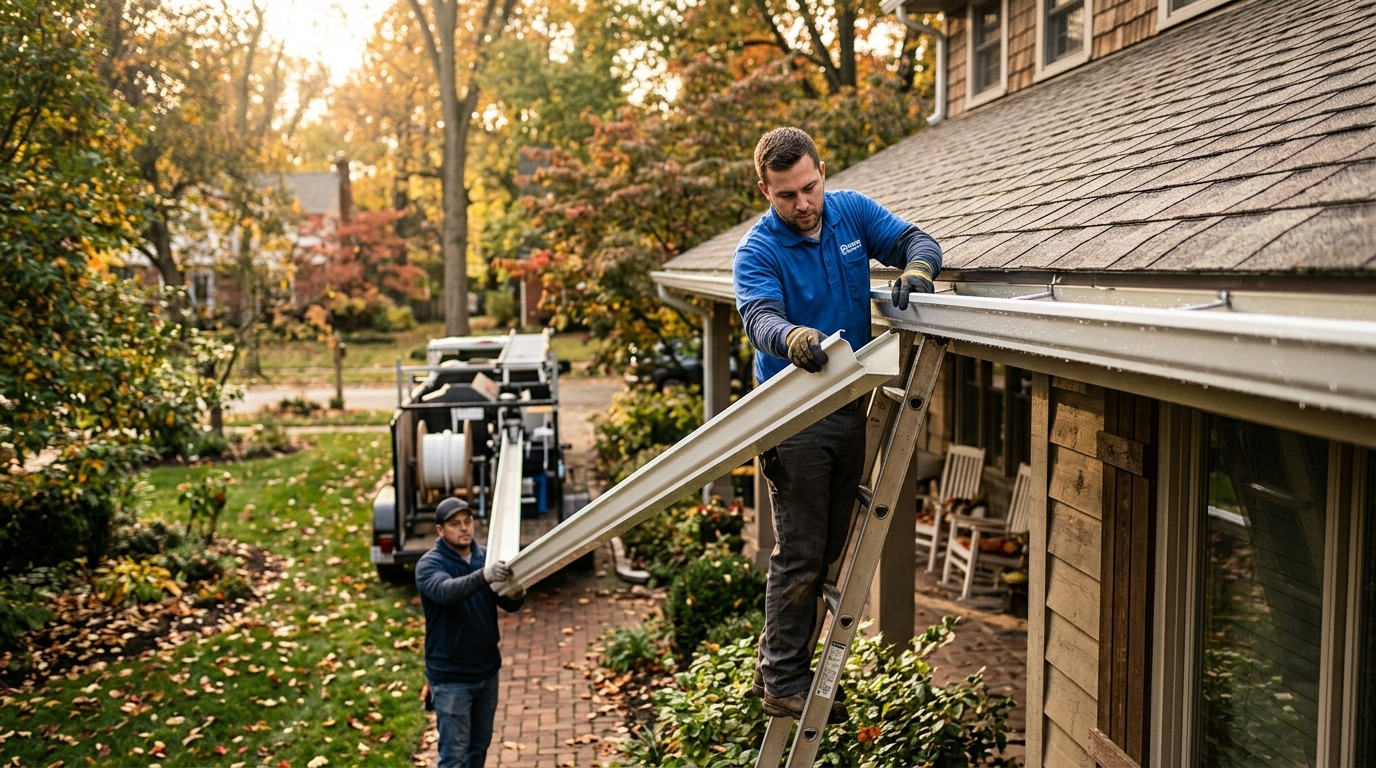
Water damage is the silent killer of residential structures, accounting for a significant portion of home repair costs annually. According to the Insurance Institute for Business and Home Safety, proper drainage systems can prevent up to 90% of basement flooding issues. When your current gutter system fails, it is not merely an aesthetic problem; it is a structural threat. This guide provides a comprehensive, professional-grade approach to inspecting your existing drainage infrastructure and executing a seamless gutter replacement. By following these steps, homeowners in Cincinnati, Dayton, and surrounding Ohio areas can protect their foundations and preserve their property value. (Contact Us Primo Exteriors)
Understanding Seamless Gutter Systems
Seamless gutters represent a significant evolution in exterior home protection technology. Unlike traditional sectional gutters, which are assembled from multiple pieces connected by joints, seamless gutters are custom-fabricated on-site from a single continuous coil of aluminum. This construction method eliminates the seams where leaks most commonly occur. The term seamless gutter is defined as a single-piece drainage system manufactured on-site to match the exact dimensions of your home's perimeter.
The primary advantage of this system is durability. Because there are no joints along the horizontal runs, there are fewer opportunities for debris accumulation and water infiltration. Furthermore, seamless gutters offer superior aesthetic appeal, providing a clean, streamlined look that enhances curb appeal. For homeowners in Ohio, where freeze-thaw cycles place immense stress on drainage materials, the structural integrity of seamless systems is particularly valuable. Primo Exteriors utilizes advanced continuous hanger systems to ensure these gutters remain securely attached to the fascia board, resisting the weight of snow and ice.
The Comprehensive Inspection Checklist
Before committing to a full replacement, a thorough inspection is required to determine the extent of the damage. Water damage often manifests in ways that are not immediately visible from the ground. You must evaluate the current system against specific failure criteria to make an informed decision.
Visual Exterior Assessment
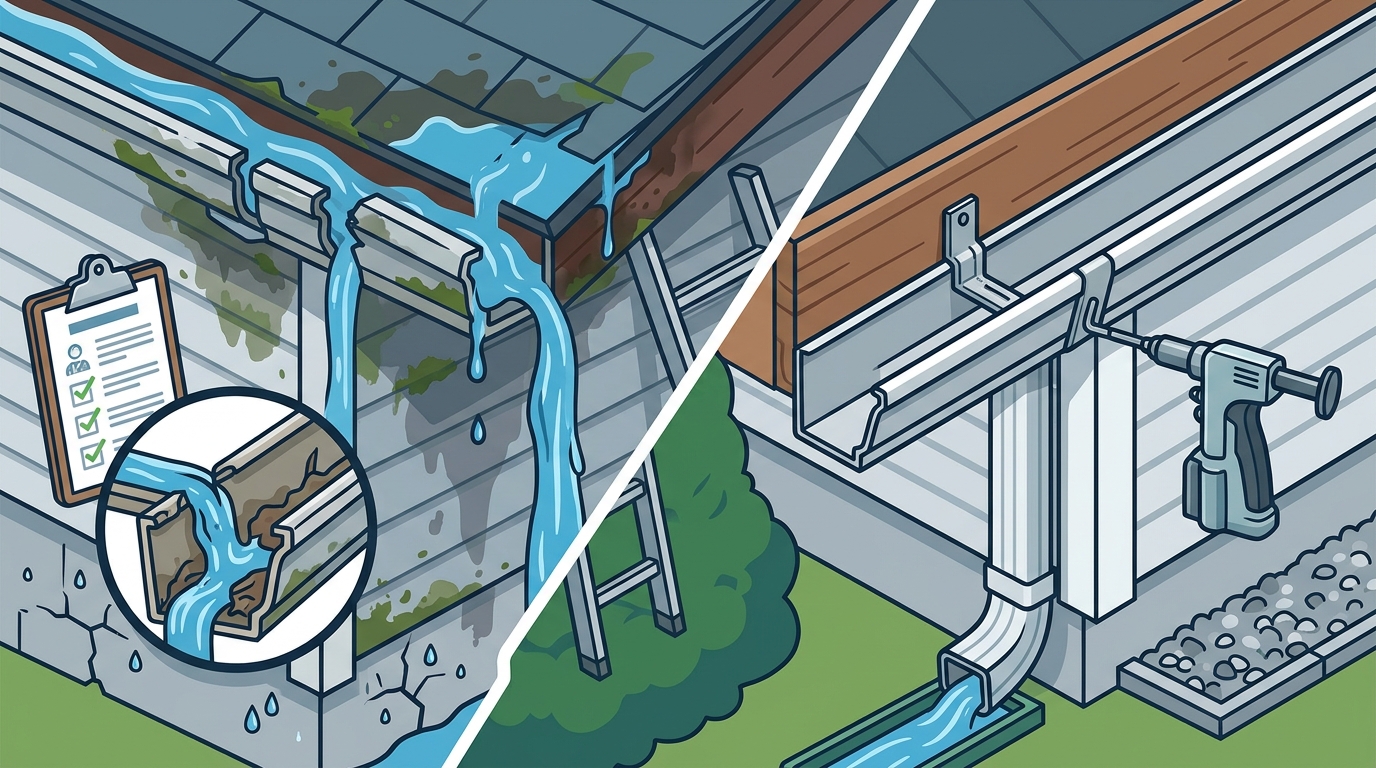
Begin by walking the perimeter of your home. Look for sagging sections that indicate failed hangers or brackets. Check for rust spots, holes, or cracks in the metal. If you see paint peeling on the gutters themselves, it suggests constant moisture exposure. According to data from the National Association of Home Builders, improper drainage is a leading cause of foundation cracks in residential properties. If your gutters are pulling away from the fascia board, the structural support has likely failed.
Interior and Foundation Signs
Inspect your basement and crawl spaces for water stains or mold growth. These are direct indicators that water is not being diverted away from your foundation. Check the siding for streaks of dirt or algae, which often signal that water is overflowing the gutters and running down the exterior walls. If you notice soil erosion or sinking near your foundation, your current gutter system is failing to manage runoff effectively.
Step 1: Safe Removal of Old Gutters
Removing old gutters is a labor-intensive task that requires proper safety equipment. Always use a sturdy extension ladder with stabilizers to prevent damage to the existing gutters and ensure your stability. Wear heavy-duty gloves to protect your hands from sharp metal edges and rust.
Start by disconnecting the downspouts. Use a screwdriver or drill to remove the screws or rivets holding the downspout sections together. Once disconnected, carefully lower the downspout pieces to the ground. Next, locate the hangers or spikes holding the gutter to the fascia. In older homes, these may be nailed in tightly. Use a pry bar to gently lift the gutter away from the fascia. Work in sections, removing the fasteners one by one. Do not force the gutter if it is stuck; check for hidden screws or nails that may have been missed.
As you remove the old system, inspect the fascia board for rot or damage. If the wood is soft or crumbling, it must be repaired or replaced before installing new gutters. Installing seamless gutters on compromised fascia will lead to premature failure. Primo Exteriors recommends addressing any structural wood issues during this phase to ensure a long-lasting installation.
Step 2: Precision Measurement and Pitch
Accurate measurement is the cornerstone of a successful seamless gutter installation. The length of the gutter run must be measured precisely from the outside edge of the roofline to the corner or downspout location. Use a tape measure and record the dimensions for each section. It is critical to account for the slope, or pitch, of the gutter.
The standard pitch for seamless gutters is one-quarter inch of drop for every ten feet of gutter length. This slope ensures that water flows efficiently toward the downspouts without pooling. If the pitch is too steep, water may move too quickly, causing noise and potential overflow at the downspout. If the pitch is too shallow, water may stagnate, leading to debris buildup and ice dams. Use a level to verify the pitch during the installation process.
Step 3: Installing the New Seamless System
Seamless gutters are typically installed using a specialized truck-mounted machine that extrudes the gutter to the exact length required. However, understanding the installation mechanics is vital for quality control. The process begins with the installation of hangers. Modern seamless gutter systems, such as the T-Rex Continuous Hanger System, use a solid hanger that runs the entire length of the gutter. This provides superior strength compared to traditional spikes and ferrules.
Secure the hangers to the fascia board using corrosion-resistant screws. Ensure that the hangers are spaced no more than two feet apart to support the weight of the gutter when filled with water and debris. Once the hangers are in place, the gutter is slid into position. The gutter is then secured to the hangers using rivets or screws. It is essential to maintain the correct pitch throughout the run.
At corners and downspout locations, the gutter is cut and joined using specialized connectors. These joints are sealed with high-quality gutter sealant to prevent leaks. The use of manufacturer-certified contractors ensures that the installation meets industry standards for warranty coverage. Primo Exteriors is an Owens Corning Preferred Contractor and a GAF Certified Residential Roofing Contractor, guaranteeing that your installation adheres to the highest quality benchmarks.
Step 4: Downspout Integration and Drainage
The downspout is the critical component that directs water away from your home. After the gutter run is installed, the downspout outlet is attached to the gutter. Use a downspout connector and sealant to create a watertight joint. The downspout should extend at least five feet away from the foundation to prevent water from pooling near the base of the house.
Consider installing downspout extensions or splash blocks to further direct runoff. In areas with heavy rainfall, such as parts of Ohio, proper drainage is essential to prevent basement flooding. The Gutter Clean System, for example, offers advanced debris protection that keeps downspouts clear and functional. Ensure that the downspout is securely fastened to the siding or fascia to prevent it from detaching during high winds.
Long-Term Maintenance and Warranty
Even with seamless gutters, regular maintenance is required to ensure optimal performance. While seamless gutters have fewer seams, they are not immune to debris accumulation. Leaves, twigs, and pine needles can still block the flow of water. It is recommended to clean the gutters at least twice a year, typically in the spring and fall.
Installing gutter guards can significantly reduce the frequency of cleaning. Products like the Alu-Rex T-Rex system provide a lifetime warranty on materials and durability, along with a 25-year clog-free warranty. These guards allow water to flow through while blocking debris, ensuring that your gutters remain functional year-round. According to industry reports, homes with gutter guards experience up to 50% less maintenance burden compared to those without.
Regularly inspect the gutters for signs of damage, such as loose hangers or leaks. Address minor issues promptly to prevent them from becoming major problems. If you notice any signs of failure, contact a professional contractor for assessment. Primo Exteriors offers 24/7 emergency support for storm damage and urgent gutter repairs.
Seamless Gutter Options Comparison
| Feature | Standard Seamless Aluminum | T-Rex Continuous Hanger System | Gutter Clean System |
|---|---|---|---|
| Material | Aluminum | Aluminum with Continuous Hanger | Weatherproof Aluminum |
| Warranty | Standard Manufacturer Warranty | Lifetime Materials & Durability | 25-Year Clog-Free Warranty |
| Debris Protection | None (Requires Cleaning) | Microfiltration Technology | Advanced Leaf Guard |
| Strength | Standard Hangers | End-to-End Strengthening | Reinforced Structure |
| Ideal For | Budget-Conscious Homeowners | Heavy Snow/Debris Areas | Existing Gutter Upgrades |
Key Takeaways
- Seamless gutters are custom-fabricated on-site to eliminate leaks at joints and provide superior durability.
- Proper pitch is critical, requiring a quarter-inch drop for every ten feet of gutter length.
- Inspection should include both exterior visual checks and interior foundation assessments for water damage.
- Primo Exteriors has over 35 years of experience serving Cincinnati, Dayton, and surrounding Ohio areas.
- The T-Rex Continuous Hanger System offers a lifetime warranty and enhanced strength against snow and ice.
- Downspouts must extend at least five feet away from the foundation to prevent basement flooding.
- Regular maintenance and gutter guards can reduce cleaning frequency by up to 50%.
Frequently Asked Questions
How long do seamless gutters last?
Seamless aluminum gutters typically last between 20 to 30 years, depending on the climate and maintenance. With the T-Rex Continuous Hanger System, the durability is extended due to the lifetime warranty on materials and sturdiness.
Do I need to replace my fascia board before installing new gutters?
If the fascia board is rotted or damaged, it must be repaired or replaced to ensure the gutters are securely attached. Installing new gutters on compromised wood will lead to premature failure.
What is the difference between seamless and sectional gutters?
Seamless gutters are made from a single continuous piece of metal, eliminating joints where leaks occur. Sectional gutters are assembled from multiple pieces connected by seams, which are prone to leaking over time.
How often should I clean my seamless gutters?
Even with seamless gutters, it is recommended to clean them at least twice a year. However, installing gutter guards can significantly reduce the need for frequent cleaning.
Can I install seamless gutters myself?
While it is technically possible, seamless gutters require specialized equipment for fabrication and installation. Professional installation ensures proper pitch, secure attachment, and warranty coverage.
What is the T-Rex Continuous Hanger System?
The T-Rex Continuous Hanger System is a gutter support method that strengthens the gutter from end to end, providing superior resistance to snow, ice, and debris weight.
Does Primo Exteriors offer emergency services?
Yes, Primo Exteriors offers 24/7 emergency support for storm damage and urgent gutter repairs to protect your home from immediate water damage.
Protect Your Home with Primo Exteriors
Don't let failing gutters compromise your home's structural integrity. Whether you need a full inspection, a seamless gutter replacement, or emergency storm damage repair, Primo Exteriors is here to help. As Ohio's most preferred contractors, we combine over 35 years of experience with manufacturer-certified expertise to deliver exceptional results. Contact us today to schedule your free, no-obligation quote and inspection. Visit our Request Estimate page to get started.