

Yes, you can install gutter guards on existing gutters without replacing them, provided the current system is structurally sound and free of severe corrosion. Primo Exteriors evaluates your current setup to determine if protective guards are a viable upgrade. This approach saves money while extending the life of your home's drainage system.
Assessing Structural Integrity
During an inspection, professionals look for specific signs of failure. A gutter that holds water after a rainstorm indicates a slope issue or a clog that guards might worsen if not addressed. In the Cincinnati and Dayton areas, freeze-thaw cycles can crack older aluminum or steel gutters. If these cracks exist, the water will seep behind the guards and into your fascia board, causing rot that is far more expensive to repair than a gutter replacement.
Primo Exteriors performs a thorough diagnostic check before recommending any product. We examine the hanger spacing and the material thickness. If the existing gutters are less than ten years old and in good shape, they are prime candidates for guards. If they are older and showing signs of fatigue, a full replacement is often the smarter long-term investment.
Material Compatibility and Fit
Not all guards work with every type of gutter. Gutter guard compatibility is the technical match between the specific guard design and the profile of your existing gutter channel. Different guard systems rely on different mechanisms to keep debris out while allowing water in.
Microfiltration systems, for example, use a fine mesh screen that sits inside the gutter. These are highly effective for blocking pine needles and small debris. However, they require a specific gutter depth and width to function correctly. If your existing gutters are a standard 5-inch or 6-inch profile, most modern microfiltration guards will fit perfectly. If you have a custom or non-standard profile, the fit may be loose, leading to gaps where debris can enter.
Surface tension guards, on the other hand, sit on top of the gutter and use the physics of water to direct flow into the channel. These are generally easier to install on existing systems because they do not require the gutter to be removed. They are a popular choice for homeowners who want to keep their current color and style. The key is ensuring the guard's lip aligns correctly with the gutter's edge to prevent overflow during heavy storms.
The Installation Process on Existing Systems
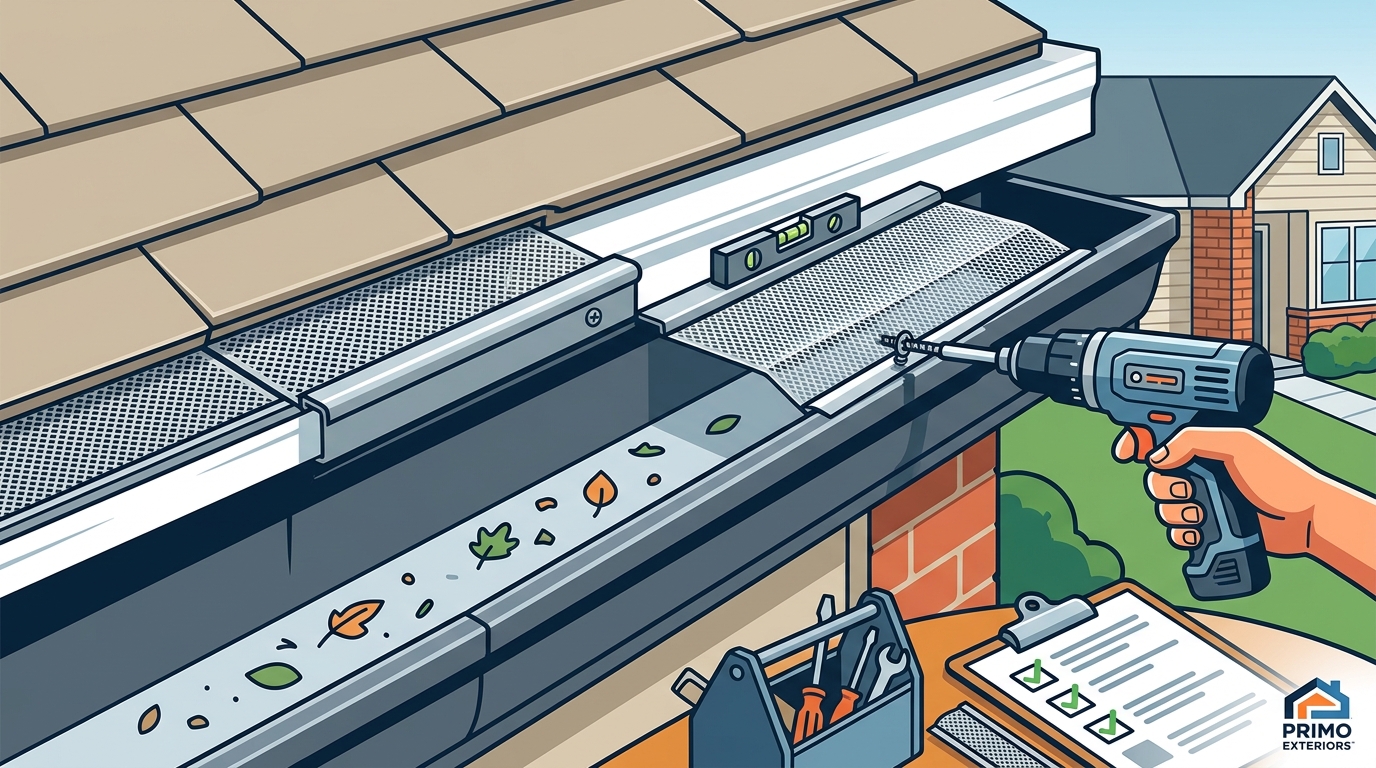
Installing guards on existing gutters is a precise process that requires professional skill. Professional installation is the methodical process of mounting protective hardware onto a pre-existing drainage system without compromising its structural support. DIY attempts often fail because they lack the specialized tools and knowledge of how water flows over different guard surfaces.
When a crew arrives, they first clean the existing gutters thoroughly. This ensures that the guards are installed on a clean surface, which is critical for the adhesion or mechanical fastening of the guard. They then measure the length of each run to ensure the guards are cut to the exact size. Cutting guards on-site requires precision to avoid creating gaps at the corners or downspout connections.
Primo Exteriors uses certified installers who are trained on the specific products we offer. We do not guess at the fit. We test the water flow during installation to ensure that the guards are directing water correctly into the downspouts. This step is crucial because a poorly installed guard can cause water to back up and overflow, defeating the entire purpose of the upgrade.
Cost-Benefit Analysis of Upgrading
Deciding between replacement and guards comes down to long-term value. Cost-effectiveness is the ratio of the initial investment to the lifespan and maintenance savings of the solution. Replacing gutters is a major project that involves removing old materials, installing new channels, and potentially repainting the fascia. Adding guards is a smaller project that focuses on protection.
If your gutters are in good condition, adding guards can save you thousands of dollars. A full gutter replacement in the Midwest can be a significant expense, especially if you choose premium materials. Guards, while not cheap, are a fraction of that cost. They also eliminate the need for frequent cleaning, which saves you time and money on annual maintenance services.
However, if your gutters are nearing the end of their life, the savings from installing guards may be short-lived. You might spend money on guards today, only to have to replace the gutters in two or three years. In this scenario, it is better to replace the gutters and install guards at the same time. This ensures that you have a new, durable system that is protected from the start.
Maintenance and Long-Term Care
Even with guards, some maintenance is required. Gutter maintenance is the routine inspection and cleaning of the drainage system to ensure it continues to function properly. While guards block most debris, they are not magic. Wind-blown leaves, pine needles, and ice can still accumulate on top of the guards.
Homeowners should inspect their gutters at least twice a year, typically in the spring and fall. This allows you to spot any issues early, such as a loose guard or a clogged downspout. If you notice water overflowing during a storm, it is a sign that the guards may need adjustment or that the gutters themselves are clogged underneath.
Primo Exteriors offers ongoing support for our customers. We can perform seasonal inspections to ensure your guards are still performing as intended. This proactive approach helps prevent small issues from becoming major problems. It also gives you peace of mind knowing that your investment is protected.
Key Takeaways
- Existing gutters must be structurally sound and free of severe corrosion to support gutter guards.
- Material compatibility is critical; the guard design must match the profile of your current gutters.
- Professional installation ensures that guards are cut and mounted correctly to prevent overflow.
- Adding guards to good gutters is often more cost-effective than a full replacement.
- If gutters are old and failing, replacing them and adding guards simultaneously is the best long-term solution.
- Regular maintenance is still required even with guards to ensure optimal performance.
Frequently Asked Questions
Do gutter guards work on all types of gutters?
No, not all guards work on all gutters. The design of the guard must match the profile and material of your existing gutters. Standard 5-inch and 6-inch gutters are the most compatible with modern guard systems.
Can I install gutter guards myself?
While some guards are marketed for DIY installation, professional installation is recommended. Professionals have the tools and expertise to ensure a proper fit and water flow, which is difficult to achieve without experience.
Will gutter guards prevent all clogs?
Gutter guards significantly reduce clogs by blocking large debris. However, they do not eliminate the need for maintenance. Small debris and ice can still accumulate, requiring occasional cleaning.
How long do gutter guards last?
High-quality gutter guards can last for many years, often matching or exceeding the lifespan of the gutters themselves. The durability depends on the material of the guard and the local weather conditions.
What if my gutters are rusted?
If your gutters are rusted, they are likely not a good candidate for guards. Rust weakens the structural integrity of the gutter, and adding guards will not fix this. A replacement is usually necessary.
Conclusion
Installing gutter guards on existing gutters is a smart move if your current system is in good condition. It protects your investment and reduces maintenance. Primo Exteriors can help you determine if your gutters are ready for this upgrade. We provide honest assessments and expert installation to ensure your home stays dry and protected. Request a free quote to get started today.