
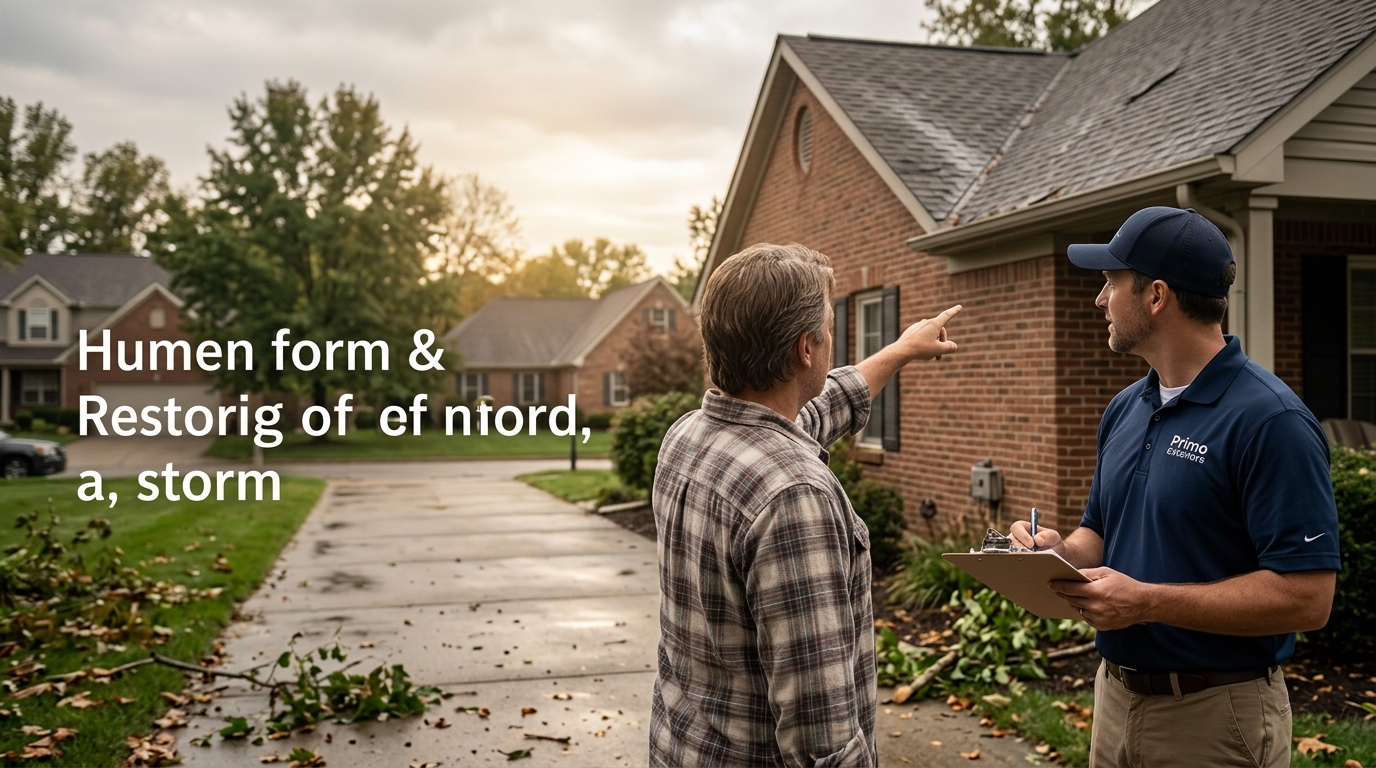
Cincinnati and Dayton sit squarely in one of Ohio's most active severe-weather corridors. When hail, high winds, or falling debris damages your roof, the decisions you make in the first 48 to 72 hours determine how smoothly — and how fully — your insurance claim pays out. This guide walks you through every step, from the moment the storm passes to the day your new roof is installed.
Step 1: Perform a Safe Ground-Level Assessment
As soon as conditions are safe, walk the perimeter of your home and look for visible signs of damage. Do not climb onto your roof — leave that to a licensed professional. Focus on evidence you can see from ground level:
- Shingles or shingle granules in the yard or gutters
- Dented gutters, downspouts, or siding
- Cracked or dented window screens, mailbox, or AC condenser fins
- Fallen tree limbs on or near the roofline
- Interior water stains on ceilings or walls
Dented soft metals on the ground — like gutter covers or aluminum trim — are often the easiest way to confirm hail actually struck your property.
Step 2: Document Everything With Timestamped Photos and Video
Thorough documentation is the single most important factor in a successful insurance claim. Photograph every angle of your roof, gutters, siding, and any interior water damage. Include wide shots of the full roof as well as close-ups of specific damage points. Note the exact date and time of the storm — this information becomes critical when you file your claim.
Many storm damage claims get denied or underpaid simply because the damage was not fully documented from the start. Timestamped evidence proves the damage occurred during the specific weather event, not from pre-existing wear and tear.
Step 3: Call a Licensed Cincinnati Roofing Contractor — Before Your Insurance Company
This is the step most homeowners get backwards. Before you call your insurer, schedule a professional roof inspection with a reputable local roofing company. A trained inspector can identify damage you cannot see from the ground, including hail bruising on shingles, loosened nail seals, and cracked flashing.
At Primo Exteriors, we provide free storm damage inspections throughout Cincinnati, Dayton, and the surrounding areas. With over 35 years of experience, our team documents every finding with detailed photos and written reports — the exact evidence your insurance adjuster needs to process your claim fairly.
Why Inspect Before Filing?
Calling your insurance company before getting an independent professional assessment means the insurer controls the first documentation of the loss. A contractor-prepared report gives you leverage and ensures nothing gets overlooked. Homeowners who have a contractor present during the adjuster's visit typically receive more complete settlements.

Step 4: Review Your Insurance Policy
Before you file, pull out your declarations page and understand three critical details:
- Your deductible — Is it a flat dollar amount or a percentage of your dwelling coverage? Percentage-based wind and hail deductibles of 1–5% are increasingly common in Ohio. On a $400,000 dwelling limit, a 2% deductible means $8,000 out of pocket, not $1,000.
- ACV vs. RCV — Actual Cash Value (ACV) policies factor in depreciation, which means a smaller payout, especially for roofs older than 15 years. Replacement Cost Value (RCV) policies pay closer to the full cost of a new roof.
- Wind/hail sub-limits — Some Ohio policies impose separate, higher deductibles specifically for wind and hail events.
Understanding these terms before you call prevents unpleasant surprises during the claims process. It is also worth confirming your coverage type well before storm season each year — not after damage has already occurred.
Step 5: File Your Insurance Claim
Contact your insurance carrier by phone or online. Have your policy number, property address, storm date, and initial documentation ready. The representative will assign a claim number and schedule an adjuster visit. Ask for the adjuster's name and direct contact information.
Most Ohio homeowner insurance policies require prompt notification after you discover storm damage. While Ohio policies generally allow up to one to two years for filing, acting within 48 to 72 hours strengthens your case and prevents secondary damage like water intrusion or mold.
Step 6: Meet the Adjuster With Your Contractor Present
Once a claim is filed, the insurance company will send an adjuster to inspect your property. This is a pivotal moment — and you should not face it alone. Have your roofing contractor on-site to walk the adjuster through every finding documented in the initial inspection report.
At Primo Exteriors, we coordinate directly with insurance adjusters, answer their questions, and advocate for full and fair coverage. We know what adjusters look for, how to present documentation properly, and how to ensure nothing gets missed in the scope of work.
Step 7: Review the Settlement and File Supplements If Needed
After the adjuster submits their report, your insurance company issues a scope of work and settlement amount. Review it carefully alongside your contractor's assessment. If there is a gap — damage your contractor documented that is not reflected in the insurance scope — this is normal and correctable.
Your roofing contractor can file a supplemental claim with supporting documentation on your behalf. This is a standard part of the storm damage claims process and often recovers thousands of additional dollars that would otherwise go unclaimed.
Important: Never accept the first settlement offer without comparing it against your contractor's independent findings.
Step 8: Choose Your Roofing Contractor and Schedule Replacement
Ohio law allows you to choose your own restoration contractor — your insurer cannot require you to use a preferred vendor from their list. When selecting a company for your storm damage roof replacement in Cincinnati or Dayton, prioritize these qualities:
- Licensing and insurance: Verify the contractor is fully licensed and carries both general liability and workers' compensation insurance.
- Local track record: Choose a company with deep roots in the Cincinnati-Dayton area, not a storm-chasing crew that follows weather events from state to state.
- Manufacturer certifications: Named, verifiable credentials from major shingle manufacturers indicate higher installation standards.
- Insurance claims experience: Your contractor should have demonstrated ability to navigate the Ohio claims process, file supplements, and communicate directly with adjusters.
- Written warranty: Demand a workmanship warranty in addition to the manufacturer's material warranty.
Primo Exteriors is a fully licensed and insured roofing company with over 35 years of experience serving Cincinnati, Dayton, and the surrounding areas. We handle every aspect of storm damage replacement — from initial inspection through final installation — using quality products and delivering the workmanship your home deserves.
Step 9: Roof Replacement Day — What to Expect
A full roof replacement on an average-sized Cincinnati home typically takes one to two days, depending on the roof's complexity, pitch, and weather conditions. Here is what a professional replacement day looks like:
- Material delivery: Shingles, underlayment, flashing, and accessories are delivered the day before or morning of installation.
- Tear-off: The existing damaged roof is stripped down to the deck. The crew inspects the decking for rot or water damage and replaces any compromised sections.
- Underlayment and ice-and-water shield: A synthetic underlayment is installed across the entire deck, with ice-and-water shield applied along eaves, valleys, and penetrations — critical protection for Ohio's freeze-thaw cycles.
- Shingle installation: New architectural shingles are installed per manufacturer specifications. Ridge vents, pipe boots, and step flashing around chimneys and walls are all replaced or sealed.
- Cleanup and final inspection: The crew performs a thorough magnetic sweep for nails, removes all debris, and conducts a final quality inspection.
Step 10: Prevent Future Storm Damage
After your new roof is in place, take proactive steps to minimize future vulnerability:
- Schedule annual professional roof inspections, especially before spring storm season
- Keep gutters clean and properly attached to ensure drainage
- Trim overhanging tree branches that could fall on the roof during high winds
- Ask your contractor about impact-resistant shingle options that may qualify for insurance premium discounts
- Review your insurance policy annually to understand your coverage before the next storm hits
Key Takeaways
- Act within 48–72 hours of the storm to document damage and begin the claims process.
- Always get a professional roof inspection before calling your insurance company — not after.
- Understand your deductible type (flat vs. percentage) and policy type (ACV vs. RCV) before filing.
- Have your roofing contractor present during the adjuster's inspection to ensure full documentation.
- Ohio law guarantees your right to choose your own contractor.
- Never sign with a contractor who offers to waive your deductible — that is considered insurance fraud in Ohio.
- Primo Exteriors offers free storm damage inspections and full insurance claims support across Cincinnati and Dayton.
Frequently Asked Questions
Does homeowner's insurance cover storm damage roof replacement in Cincinnati?
In most cases, yes. Standard Ohio homeowner policies (HO-3) cover roof damage caused by sudden events including wind, hail, and falling trees. However, they do not cover gradual wear, maintenance neglect, or flooding. The amount you receive depends on whether your policy is ACV or RCV and your specific deductible structure.
How quickly should I file a claim after a storm damages my roof?
File as soon as possible. Most Ohio policies require prompt notification, and while formal deadlines may extend to one or two years, evidence deteriorates over time and delayed claims raise more questions from insurers. Acting within 48–72 hours is ideal.
Can my insurance company force me to use a specific roofing contractor?
No. Ohio law allows you to choose your own restoration contractor. Your insurer cannot require you to use their preferred vendor list. Choose a locally established, fully licensed company with storm damage experience.
How long does a full roof replacement take in Cincinnati?
Most residential roof replacements on average-sized Cincinnati homes take one to two days. Complexity, roof pitch, weather, and the extent of decking repairs can extend the timeline.
What is the difference between ACV and RCV insurance policies for roofing?
Actual Cash Value (ACV) policies pay the current replacement cost minus depreciation based on your roof's age. Replacement Cost Value (RCV) policies pay closer to the full cost of a new roof. RCV policies are significantly more favorable for older roofs but may include a holdback released after the work is completed.
Why should I choose Primo Exteriors for storm damage roof replacement?
Primo Exteriors is a fully licensed and insured roofing, siding, and gutter company with over 35 years of experience in Cincinnati, Dayton, and the surrounding areas. We provide free storm damage inspections, handle insurance claim coordination, and deliver quality workmanship backed by strong warranties. Our local roots mean we are here for the long term — not just passing through after a storm.