
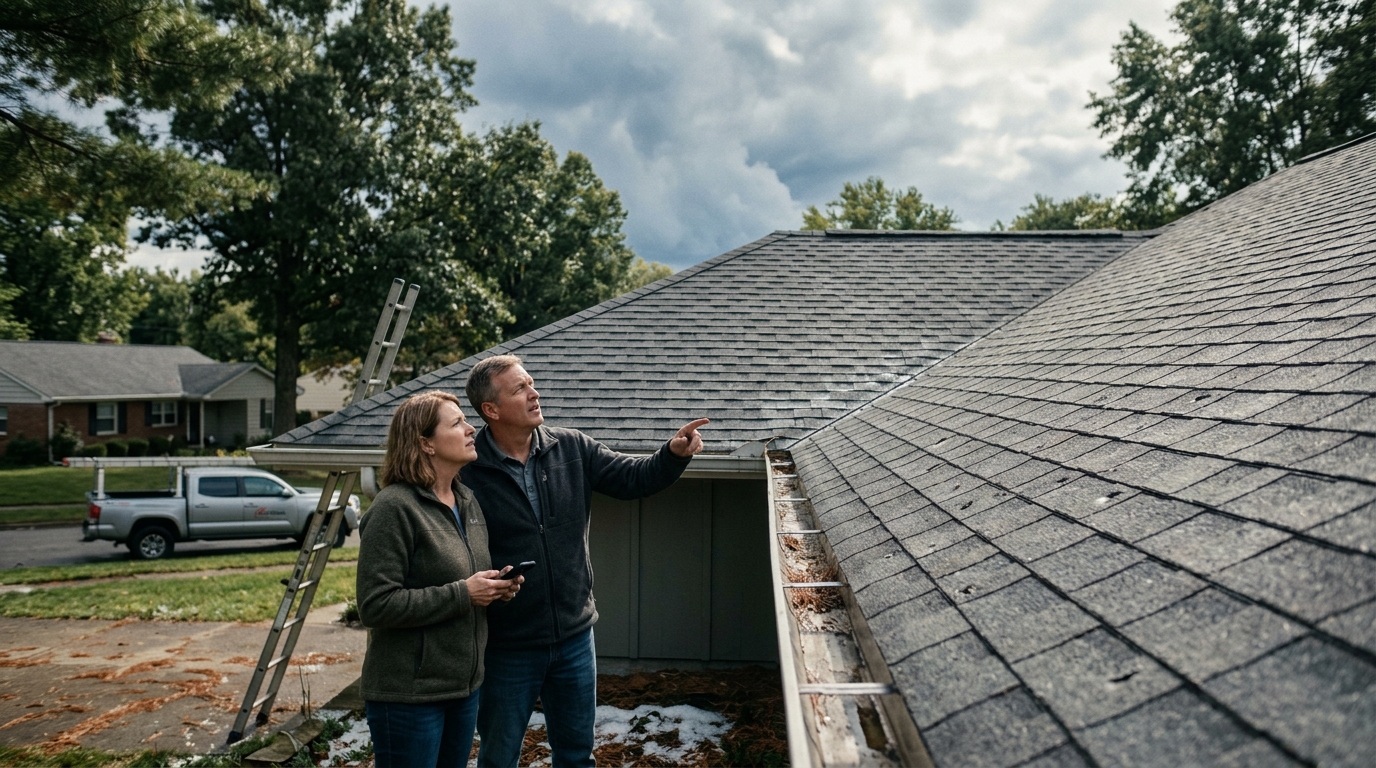
A severe storm just rolled through Cincinnati. The thunder has stopped, the hail has melted, and now you're staring at your roof wondering what comes next. This step-by-step guide from Primo Exteriors walks you through every action — from the moment the storm passes to the day your repaired roof passes its final inspection — so you protect both your home and your insurance claim.
Why Cincinnati Homeowners Face Elevated Storm and Hail Risk
Cincinnati sits in one of the most active spring storm corridors in the Midwest. Hail events, high winds, and heavy rain strike the region every year, and the damage they leave behind is frequently underestimated. Hailstones under one inch — the most common size in Southwest Ohio — can strip the protective granule layer from asphalt shingles without leaving an obvious visible crack. The roof looks fine from the ground while silently losing years of service life underneath.
That deceptive nature is precisely why having a clear, repeatable process matters. If you skip steps or wait too long, a manageable repair can turn into a costly full replacement — and your insurance claim window may close before you act.
Step 1: Stay Safe — Do Not Climb on the Roof
Your first instinct may be to grab a ladder. Resist it. Wet decking, displaced shingles, and hidden structural weaknesses make a post-storm roof extremely dangerous for anyone without fall-protection equipment. Instead, perform your initial assessment entirely from the ground.
- Walk the perimeter of your home and look up for missing shingles, bent flashing, or debris sitting on the roof surface.
- Check your gutters and downspouts for dents — dented metal gutters are one of the clearest surface-level indicators of hail impact.
- Look inside your attic (if accessible) for daylight coming through the decking or fresh water stains.
- Check ceilings in upstairs rooms for new discoloration that appeared after the storm.
Step 2: Document Everything From the Ground
Strong documentation is the single biggest factor in whether your insurance claim gets approved at full value or gets underpaid. Before you touch anything or make temporary repairs:
- Photograph all visible damage — siding, gutters, downspouts, windowsills, and any debris on the ground. Use your phone's timestamp feature.
- Record the date, time, and approximate hail size of the storm. If neighbors collected hailstones, photograph those too.
- Video-walk your property narrating what you see. Adjusters respond well to clear, organized evidence.
- Save weather alerts from that day — screenshots of NWS warnings tie damage to a specific event, which is exactly what insurers require.
Step 3: Make Emergency Temporary Repairs
If your roof has an active opening — blown-off shingles, a puncture from a fallen branch, or a torn section — water can saturate attic insulation, soak ceiling drywall, and reach structural framing within hours. Temporary repairs are not optional; they prevent compounding damage while you wait for permanent work.
- Tarp exposed areas — drape a heavy-duty tarp over the damaged section and anchor it with weighted boards or sandbags. Never nail a tarp directly into undamaged shingles.
- Secure loose shingles with roofing cement or nails if they can be safely reached from a ladder at the eave line.
- Patch active leaks inside with a bucket and towels to protect flooring and furniture.
- Clear gutters of debris so water drains away from the foundation rather than pooling.
Keep all receipts for tarps and supplies — your insurance policy typically reimburses reasonable emergency mitigation costs.

Step 4: Call a Licensed, Local Roofing Contractor
This is the step where many homeowners go wrong. After a major hail event, out-of-state storm chasers flood Cincinnati neighborhoods knocking on doors. They offer fast repairs, disappear in weeks, and leave you with no warranty recourse. Instead, choose a roofing company that meets these criteria:
- Licensed and insured in Ohio — ask for their certificate of insurance and verify it.
- Established local presence — a company with decades in the Cincinnati and Dayton market will be here to honor warranties. Primo Exteriors has served the region for over 35 years.
- Experience with insurance claims — your contractor should know how to document damage in the format adjusters expect and be willing to meet the adjuster on-site.
- Full exterior capabilities — storms rarely damage just the roof. Siding, gutters, fascia, and soffit often take hits simultaneously. A single contractor who handles roofing, siding, and gutters streamlines the entire project.
Step 5: Schedule a Professional Roof Inspection
A qualified roofing contractor will perform a far more thorough inspection than you can from the ground. Expect the inspector to:
- Walk every plane of the roof checking for circular hail impact marks, creased shingles, cracked flashing, and exposed nail heads.
- Inspect pipe boots, chimney flashing, and skylight seals — wind forces water under flashing at these penetration points, making them a leading cause of post-storm interior leaks.
- Examine soffit and fascia for dents or cracks.
- Check attic decking for moisture intrusion.
- Produce a written assessment with dated, labeled photographs suitable for your insurance claim.
At Primo Exteriors, we provide free post-storm roof inspections throughout Cincinnati, Dayton, and the surrounding communities. If there is no damage, we tell you honestly — no pressure, no unnecessary claim filing.
Step 6: File Your Insurance Claim Promptly
Ohio homeowner policies are time-sensitive for storm damage claims. Do not wait weeks or months. Here is a streamlined filing process:
- Review your policy — confirm hail and wind damage coverage, understand your deductible, and note any exclusions or depreciation schedules.
- Call your carrier — report the loss and request a claim number. Provide the date of the storm and a brief description of visible damage.
- Share your contractor's inspection report — this professional documentation is critical because adjusters need evidence tying the damage to a specific weather event rather than normal aging.
- Request an adjuster visit — ask that your roofing contractor be present during the adjuster's inspection so both parties see the same damage at the same time.
Step 7: Be Present for the Adjuster Meeting
When the insurance adjuster visits your property, your contractor should walk the roof with them. This matters because storm damage presents specific patterns — circular hail bruising, directional wind damage — that are distinguishable from normal aging, and a knowledgeable contractor can point these out in real time.
Tips for the adjuster meeting:
- Have your own photo documentation organized and ready.
- Ask the adjuster to explain their scope of work line by line.
- If the adjuster's estimate seems low, ask your contractor to review it and prepare a supplement if warranted.
- Never sign a contract or cash a check on the spot without reviewing everything first.
Step 8: Review the Scope and Approve Repairs
Once the claim is approved, your contractor should present a detailed scope of work matching the insurer's approved line items. Review it carefully:
- Confirm material specifications — make sure the claim reflects the actual materials being installed, not a downgrade to cheaper products.
- Verify the work includes underlayment, ice-and-water shield in valleys, drip edge, and proper ventilation — not just shingles.
- Ask about the warranty — Primo Exteriors backs every project with a workmanship warranty in addition to the manufacturer's material warranty.
- Confirm the project timeline. Most storm damage repairs in Cincinnati take 4–8 weeks from initial inspection to completed work, depending on insurance carrier response times and material availability.
Step 9: Completed Repairs and Final Walk-Through
When the crew finishes, do a walk-through with your project manager:
- Inspect the finished roof from the ground — uniform shingle lines, clean flashing, and no exposed nails.
- Check that gutters, downspouts, siding, and fascia repairs (if included) are complete.
- Verify that all debris has been removed and a magnetic nail sweep has been done on your property.
- Collect all warranty documentation — both the manufacturer certificate and the contractor's workmanship guarantee.
- Confirm final payment terms with your insurer, including any depreciation holdback release.
Key Takeaways
- Never climb on a storm-damaged roof yourself. Document from the ground and call a professional.
- Document immediately. Photos, video, hail size, and weather alerts protect your claim.
- Make emergency temporary repairs to stop water intrusion — and save your receipts.
- Choose a local, licensed contractor with insurance claim experience — avoid out-of-state storm chasers.
- File your claim promptly. Ohio policies have time-sensitive filing windows for storm damage.
- Have your contractor meet the adjuster so damage is accurately documented and fairly valued.
- Review every line item before approving repairs to avoid material downgrades.
Why Cincinnati and Dayton Homeowners Choose Primo Exteriors for Storm Damage Repairs
With over 35 years of experience serving Cincinnati, Dayton, and the surrounding areas, Primo Exteriors is a fully licensed and insured roofing, siding, and gutter company built on quality workmanship and honest customer service. When storms hit, we provide:
- Free post-storm inspections with detailed photo documentation.
- Full insurance claim support — we work directly with your adjuster and handle supplement negotiations.
- Complete exterior repair capability — roof, siding, gutters, fascia, and soffit under one contractor.
- Proven local presence — we are here to honor warranties for years to come, not a storm-chasing crew that disappears.
If your Cincinnati or Dayton home was recently hit by hail or storm damage, contact Primo Exteriors today to schedule your free inspection.
Frequently Asked Questions
- How soon after a storm should I have my Cincinnati roof inspected?
- As soon as it is safe to be outside — ideally within 24–48 hours. Early inspection preserves evidence and keeps you within your policy's filing window.
- Does homeowner's insurance cover hail damage to my roof in Ohio?
- In most cases, yes. Hail, wind, and storm damage are typically covered under standard homeowner's policies minus your deductible. The key is professional documentation tying the damage to a specific weather event.
- How long does a storm damage roof repair take in Cincinnati?
- Most projects take 4–8 weeks from the initial inspection through completed repair, depending on the insurance carrier's response time and material availability.
- How can I tell the difference between hail damage and normal roof wear?
- Hail damage creates circular impact marks where the granule layer has been knocked off, and it follows a random pattern across the roof. Normal wear tends to be uniform. A professional inspection is the most reliable way to distinguish between them.
- Should I file a claim if my neighbor got a new roof from theirs?
- If you are in the same neighborhood, it is worth getting a free inspection. Hail storms affect entire areas, so adjacent homes often sustain similar damage.
- What areas does Primo Exteriors serve for storm damage repairs?
- We serve Cincinnati, Dayton, and the surrounding communities across Southwest Ohio including Hamilton County, Montgomery County, and neighboring areas.